PARTNER
Partner
Basic level
Key benefits
Terms
Details
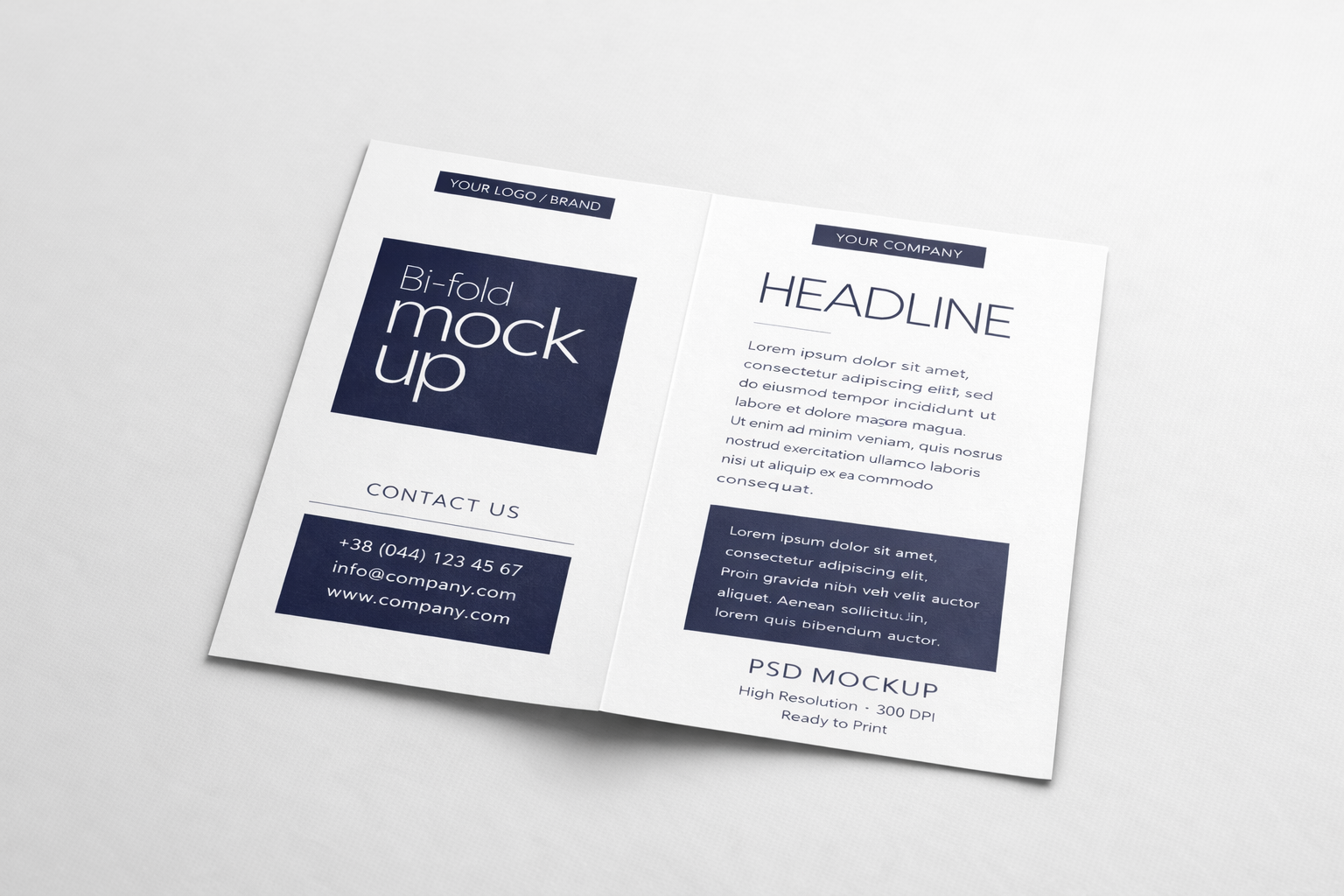
The “Double-DL half-fold brochure” product is intended for structured presentations of services, menus, programmes, routes, instructions and commercial offers. It is not an arbitrary print item: performance depends on where, how and how long it will be used. One half fold creates four logical pages: cover, inside spread and back; prepare the outer and inner sides as separate spreads.
Before ordering “Double-DL half-fold brochure”, define flat size, fold scheme, panel widths, paper and the intended reading sequence. Every choice affects appearance, usability, lead time and unit cost. Two quotations are comparable only when their specifications match. A change in application may justify a different production route.
The practical value of “Double-DL half-fold brochure” depends on how closely its format fits the real situation. List mandatory information first and define one primary reader action. Remove elements that do not support that action. Longer explanations can move to a web page reached through a QR code.
Choose material for “Double-DL half-fold brochure” by function, not from a sample photograph alone. Weight affects stiffness, surface influences colour and touch, and finishing changes resistance during normal handling. The current product configuration defines which combinations can actually be ordered.
A common risk with “Double-DL half-fold brochure” is equal panel widths are not always correct for a roll-fold construction. Technical preflight identifies format, bleed, resolution and font problems. It does not replace editorial proofreading. Names, telephone numbers, prices, dates, addresses and QR destinations must be confirmed before final approval.
To price “Double-DL half-fold brochure”, select the available characteristics, quantity and production time. The calculator then shows the cost for that specification. Upload finished artwork during checkout. Non-standard materials, dimensions or finishing should be agreed separately before payment.
In artwork for “Double-DL half-fold brochure”, each panel should have a defined role and account for every fold line. Extend edge-to-edge backgrounds into bleed. Keep copy, logos and codes within the safe area. Inspect raster images at final scale, and either embed fonts in the PDF or convert them to outlines.
Colour for “Double-DL half-fold brochure” requires realistic expectations. A monitor emits RGB light, whereas print uses inks on a physical substrate. The screen is therefore not an exact colour proof. Identify critical brand colours and agree on a suitable control method before the complete run begins.
Production of “Double-DL half-fold brochure” starts after payment and approval of a print-ready file. Shipping time is separate from manufacturing time and depends on the carrier and destination. Urgent schedules should include an allowance for corrections, approval, packing and dispatch.
A repeat run of “Double-DL half-fold brochure” can move faster when the previous order number and approved PDF are available. Check the file again whenever contacts, price, date, link or product information changes. This prevents obsolete details from entering a new batch.
Calculate the quantity of “Double-DL half-fold brochure” from its real period of use. For an event, allow for attendance and a sensible reserve. For routine work, use average consumption and the interval before reordering. Excess stock may become obsolete when prices, contacts or branding change.
Store the finished “Double-DL half-fold brochure” run in a dry room away from direct sunlight and abrupt temperature changes. Paper and board respond to humidity, so open protective packing close to use. Storage matters particularly for coated, folded or adhesive products.
When “Double-DL half-fold brochure” requires several language or product versions, approve one visual system first. Keep the grid, fonts, logo and technical zones consistent, then proof variable copy separately. This maintains recognition and reduces the risk of assigning artwork to the wrong version.
After receiving “Double-DL half-fold brochure”, check the number of packages, edge condition, front-to-back consistency and the legibility of control elements. Record any concern immediately after unpacking. Before reordering, note which specification choices performed well in actual use.
Do not treat a photograph or screen preview of “Double-DL half-fold brochure” as an exact scale proof. Open the PDF at 100 percent and inspect the smallest copy before approval. Where practical, print a rough sheet at actual size and assess the composition by hand.
Before paying for “Double-DL half-fold brochure”, answer four questions. Where will it be used? Who will read or handle it? Which information is mandatory? What should the customer do next? Clear answers keep the design focused and prevent unnecessary production costs.
The production brief for “Double-DL half-fold brochure” should state the intended use, flat size, fold scheme, panel widths, paper and the intended reading sequence, the number of versions and the required delivery date. List mandatory elements, packing expectations and service conditions separately. This information makes parameter conflicts visible early, removes ambiguity from the artwork review and allows the required configuration to be priced accurately.
A common risk with “Double-DL half-fold brochure” is equal panel widths are not always correct for a roll-fold construction. Technical preflight identifies format, bleed, resolution and font problems. It does not replace editorial proofreading. Names, telephone numbers, prices, dates, addresses and QR destinations must be confirmed before final approval.
To price “Double-DL half-fold brochure”, select the available characteristics, quantity and production time. The calculator then shows the cost for that specification. Upload finished artwork during checkout. Non-standard materials, dimensions or finishing should be agreed separately before payment.
Need a different size, material, finish, quantity or a custom product? Message us on Telegram. We will check production feasibility and prepare an individual quote.
Check the dimensions, safe area, colour profiles and fonts.
202×214 mm
198×210 mm
194×206 mm
The artwork did not pass validation.
A manager will check the file and explain how to correct its size, resolution, colour space or format.