PARTNER
Partner
Basic level
Key benefits
Terms
Details
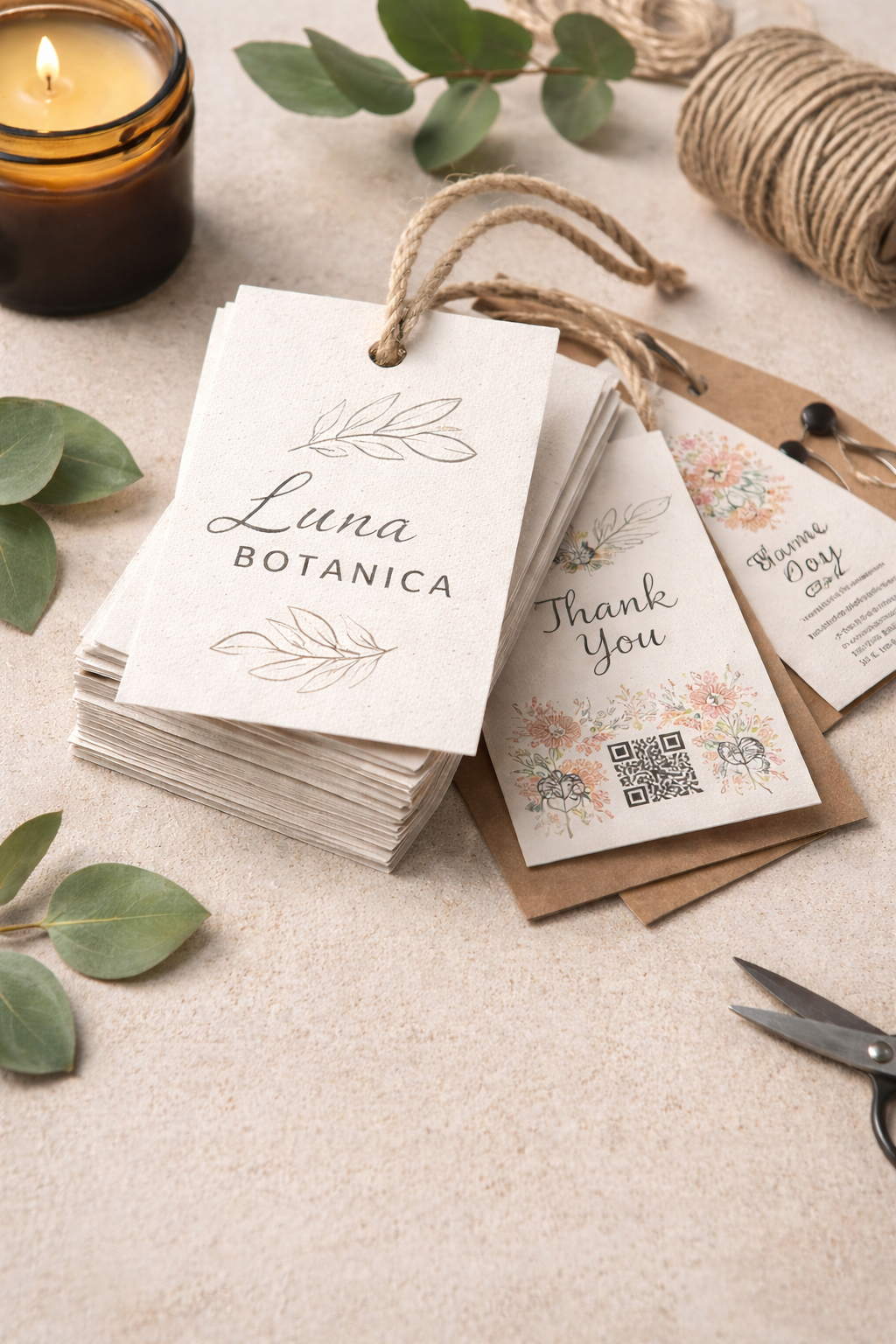
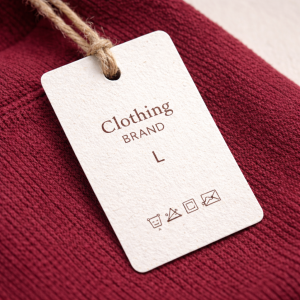
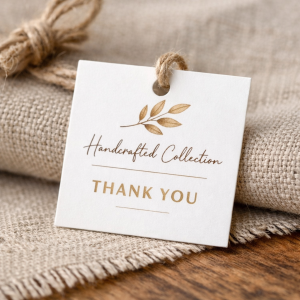
50×70 mm tags offer a practical balance between a compact label and enough room for useful product information. The rectangular format is easy to attach to clothing, accessories, gifts and packaging, while its vertical proportions give a logo, illustration or typographic composition more breathing space than a small square tag.
This size is frequently selected by clothing brands, online stores, handmade makers, cosmetic companies, candle studios, gift shops and manufacturers of craft products. It supports both simple brand identification and more detailed communication with the buyer.
The layout may include a logo, brand name, website, social media account, short description, material composition, care instructions, size, price, barcode or QR code. A two-sided tag allows the visual message and technical information to remain separate. The front can attract attention while the reverse gives the customer everything needed to use or identify the product.
Prioritise information instead of filling the entire surface. A clear heading, consistent typography and sufficient white space usually look more professional than many competing elements. Codes should have strong contrast and be tested at the printed dimensions.
A 50×70 mm hang tag works well on garments, bags, belts, scarves, toys, jewellery, candles, cosmetics, soap, confectionery, souvenir products and gift sets. It can be tied to a product, attached to a ribbon or used as a small insert in packaging. The proportions are also convenient for price information and short care instructions.
Consistent tags help customers connect products with the same maker. They repeat the colours, logo and tone used on the website, social media and packaging. For local brands and growing businesses, this small printed detail can significantly improve the perceived completeness of a product.
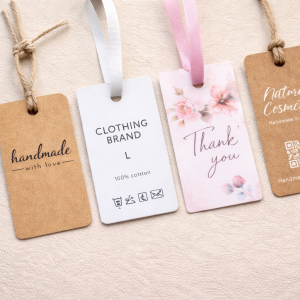
Available materials may include coated paper, dense matt card, kraft stock and designer papers. Smooth coated card gives sharp text, predictable colour and a clean retail appearance. Kraft paper supports natural, handmade and environmentally conscious positioning. Designer papers add texture, colour or a tactile finish that can become part of the visual identity.
Consider how the tag will be handled. A tag attached to clothing may need greater stiffness and resistance than an insert placed inside a box. Dark or coloured paper changes the appearance of ink, while strongly textured stock may reduce the clarity of very small details. Match the artwork to the selected material before approving the order.
One-sided printing is suitable for a simple logo, price or short message. Two-sided printing provides more freedom: use the front for branding and the reverse for composition, contacts, a barcode or care information. This avoids reducing font sizes and keeps the design readable.
Optional finishing depends on the product configuration and may include lamination, rounded corners and drilled holes. A hole allows the tag to be attached with cord, thread, ribbon or a plastic fastener. Its position must remain inside the production area and away from text, logos and codes.
Prepare the document at the final dimensions and follow the production template for bleed and safe margins. Backgrounds and images that reach the edge should extend into the bleed. Keep important content away from cutting and drilling areas. Vector logos and embedded fonts help preserve sharpness; photographs should have adequate resolution.
Use a type size that remains comfortable to read in print, not only when enlarged on screen. Avoid excessively thin strokes and low-contrast colour combinations. Check product names, contact details, prices, composition and QR links carefully. Our technical review covers dimensions and basic print readiness, not editorial proofreading of customer content.
A printed tag can explain what makes a product special, provide care instructions and guide a buyer back to the brand online. It remains with the item during display, gifting and purchase, so it can influence both the first impression and the later customer experience.
Custom 50×70 mm tags can be produced for a seasonal collection, a limited handmade batch or regular retail supply. Select quantity, paper, printing and finishing in the calculator. Upload the final artwork only after checking the content at actual size.
The format remains compact but provides more vertical space than a square tag, making it convenient for a logo and several lines of product information.
Yes. Two-sided printing is recommended when branding and technical information need separate space.
Yes, when the option is available in the configurator. Keep the hole area free from important artwork.
Yes. Use a high-contrast code, maintain a clear quiet zone and test it at the final printed size.
A print-ready PDF is usually preferred. Follow the stated dimensions, bleed, safe margins, colour requirements and font embedding rules.
Need a different size, material, finish, quantity or a custom product? Message us on Telegram. We will check production feasibility and prepare an individual quote.
Check the dimensions, safe area, colour profiles and fonts.
54×74 mm
50×70 mm
46×66 mm
The artwork did not pass validation.
A manager will check the file and explain how to correct its size, resolution, colour space or format.